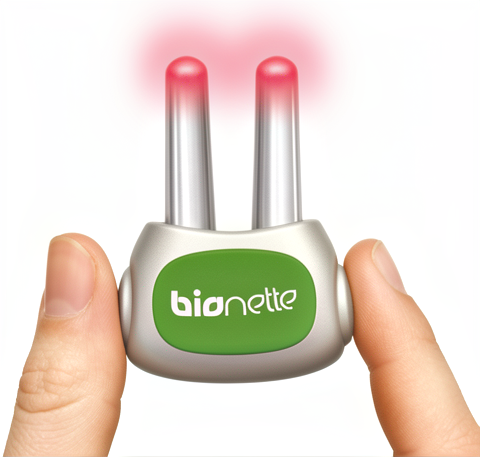
Biutinette likely refers to Bionette, a drug-free electronic device that uses intranasal light therapy to help manage allergic rhinitis and hay fever symptoms. Unlike traditional allergy medicines, it works without antihistamines or nasal sprays.
The important distinction is that “biutinette” itself should not automatically be treated as a separate medicine or medical device. If you encountered the spelling on a search engine, product listing, social media post, or article, checking the original source can help confirm whether Bionette was intended.
What Is Bionette Used For?
Bionette is intended to help people dealing with symptoms associated with allergic rhinitis, commonly known as hay fever when triggered by seasonal allergens. Typical symptoms can include sneezing, a runny or blocked nose, nasal itching, and sometimes irritated or watery eyes.
Research into intranasal red-light phototherapy has reported improvements in several allergic-rhinitis symptoms. One randomized study involving narrow-band red light at 660 nm found improvements in symptoms among allergic-rhinitis patients compared with sham treatment.
That does not mean every person with allergies will experience the same results. Phototherapy is better viewed as a treatment approach that has been studied for symptom relief rather than a guaranteed cure for allergies.
How Does Bionette Work?
Bionette works through intranasal phototherapy, meaning light is delivered inside the nasal passages. Instead of introducing a drug into the body, the device uses a controlled light source directed toward the nasal tissue.
The idea behind this approach comes from research suggesting that specific wavelengths of light may influence inflammatory processes involved in allergic rhinitis. Earlier research has examined narrow-band red light around 660 nm, while phototherapy devices and research protocols can use different wavelengths and treatment schedules.
This is why it is useful to distinguish Bionette from ordinary red-light products. A medical phototherapy device is designed around a specific application, wavelength, exposure, and treatment method.
Bionette and Red Light Therapy
The term red light therapy covers a broad range of technologies, so it can be misleading to assume that every red-light product works in the same way. Bionette’s relevance is specifically connected with light delivered inside the nasal passages for allergic-rhinitis symptoms.
Clinical research continues to examine photobiomodulation for allergic rhinitis. A 2025 randomized, placebo-controlled clinical trial involving 62 people found that a particular photobiomodulation protocol produced improvements in several nasal and respiratory measures, although olfactory testing did not show a significant improvement.
This newer research supports continued interest in the field, but it should not be interpreted as proof that every phototherapy device or every wavelength will produce identical results.
Can Bionette Help With Hay Fever?
Bionette may help relieve some hay fever and allergic-rhinitis symptoms, but it should not be described as a permanent cure for the underlying allergy. Earlier controlled research on a phototherapy device found significant reductions in some hay-fever symptoms, including sneezing and runny nose, after treatment.
The response can vary from person to person. Allergic rhinitis also has different triggers, including pollen, dust mites, mold, and animal allergens, so identifying and reducing exposure to the relevant trigger remains an important part of managing symptoms.
What Symptoms May Be Relevant?
People searching for Bionette are often dealing with familiar allergy symptoms such as repeated sneezing, a watery or runny nose, nasal congestion, or an itchy nose. These symptoms can become especially frustrating during periods when pollen levels are high.
Some studies of intranasal phototherapy have reported improvements in several of these symptoms. However, research results have not been completely consistent across every outcome, which is why it is better to describe phototherapy as a potential symptom-management option rather than a universally effective treatment.
Is Bionette Drug-Free?
Yes, Bionette is described as a drug-free electronic treatment approach because it relies on light rather than an antihistamine or corticosteroid medication. That distinction may appeal to people who are interested in non-drug options for managing nasal allergy symptoms.
However, “drug-free” does not automatically mean that a device is appropriate for everyone. People with persistent, severe, unusual, or worsening nasal symptoms should still discuss their condition with a qualified healthcare professional.
Bionette vs Allergy Medication
Traditional allergic-rhinitis treatment can include antihistamines, corticosteroid nasal sprays, saline rinses, allergen avoidance, and other approaches depending on the person’s symptoms and medical history. Bionette takes a different route by using phototherapy.
The right option depends on the individual. Someone with mild seasonal symptoms may manage them differently from someone who has persistent congestion throughout the year. Phototherapy may also be considered alongside other approaches rather than automatically replacing established treatment.
A healthcare professional can help determine whether a person’s symptoms actually fit allergic rhinitis and whether a particular treatment is suitable.
What Does Research Say About Intranasal Phototherapy?
Research on intranasal phototherapy is promising but deserves a balanced interpretation. A review of studies involving devices such as Bionase, Allergy Reliever, and Rhinolight reported that many studies showed improvements in symptoms and quality-of-life measures, while also noting limitations in the quality and consistency of the evidence.
Earlier randomized research also found benefits from narrow-band red light for allergic rhinitis. In one study, 72% of allergic-rhinitis patients reported symptom improvement following treatment, compared with 24% in the placebo group.
These findings are encouraging, but they do not establish that every patient will benefit or that phototherapy should replace standard medical care.
Is Bionette Safe?
The safety of a specific device depends on its design, instructions, treatment protocol, and the person using it. Research reviews have generally described intranasal phototherapy as reasonably well tolerated, but they have also pointed out that long-term evidence has been limited.
For that reason, users should follow the manufacturer’s instructions rather than increasing treatment time or frequency on their own. If treatment causes persistent pain, bleeding, significant irritation, or another unexpected problem, it is sensible to stop and seek medical advice.
Who Should Be Careful With Nasal Phototherapy?
Not every blocked or runny nose is caused by an allergy. Nasal symptoms can also result from infections, structural problems, chronic sinus disease, nasal polyps, irritants, or other conditions.
This matters because some early phototherapy research excluded people with conditions such as severe nasal septum deviation, nasal polyps, sinusitis, or recent respiratory infections.
If symptoms are severe, unusual, persistent, or accompanied by repeated nosebleeds, facial pain, fever, breathing difficulty, or other concerning signs, professional medical assessment is more appropriate than relying on a home treatment device.
Can Bionette Replace Allergy Medicine?
It should not automatically be assumed that Bionette can replace prescribed or over-the-counter allergy treatment. The available research suggests that intranasal phototherapy can improve certain symptoms, but evidence quality and treatment protocols differ between studies.
Someone already using medication for allergic rhinitis should speak with a healthcare professional before changing or stopping treatment. A drug-free device can be an alternative approach for some people, but that decision depends on the individual’s symptoms and medical circumstances.
Why Are People Searching for “Biutinette”?
The unusual spelling biutinette may simply be a search variation for Bionette. People frequently type product names based on how they sound, especially when the name is unfamiliar or has been heard rather than read.
If your search began with “biutinette,” checking Bionette is therefore a useful next step. The latter is the established name associated with the electronic phototherapy device discussed in medical and product-related sources.
Conclusion
The simplest way to understand Bionette is this: it is a drug-free electronic phototherapy approach designed to deliver light inside the nose to help manage symptoms associated with allergic rhinitis and hay fever.
Research into intranasal phototherapy has produced encouraging results, including improvements in some allergy symptoms. At the same time, the evidence is not strong enough to suggest that phototherapy is a guaranteed cure or that it should replace conventional treatment for everyone.
If you came across the term biutinette, the most likely explanation is that the intended term was Bionette. Checking the exact product name and following the manufacturer’s instructions can help avoid confusion, particularly when dealing with a medical device.
Frequently Asked Questions
Is biutinette the same as Bionette?
Biutinette appears to be a misspelling or search variation of Bionette. Bionette is associated with a drug-free electronic phototherapy device designed for allergic-rhinitis and hay-fever symptom management.
What is Bionette used for?
Bionette is intended to help manage symptoms associated with allergic rhinitis, including problems such as sneezing, runny nose, nasal irritation, and congestion. Research on intranasal phototherapy has reported improvements in some allergy symptoms.
Does Bionette use medication?
No. Bionette is designed as a drug-free electronic treatment that uses light rather than conventional allergy medication.
Does red light therapy help allergic rhinitis?
Some clinical studies suggest that intranasal phototherapy may improve certain allergic-rhinitis symptoms. However, results vary between studies and treatment protocols, so it should not be presented as a guaranteed cure.
Can Bionette cure hay fever?
Bionette should not be described as a cure for hay fever. It is better understood as a potential symptom-management approach that may help some people with allergic-rhinitis symptoms.